What to see in Belém: a local guide
Discover what to see in Belém, Lisbon, from Jerónimos Monastery and Belém Tower to MAAT, CCB, riverside walks and local food stops.
Belém is one of the easiest areas in Lisbon to visit badly. People rush in, queue for one monument, eat a pastel, take a photo by the river, then leave thinking they have “done” it. In reality, Belém works much better when you treat it as a neighbourhood with its own rhythm, not just a checklist of famous sights.
In this article, you will find what to see in Belém, which places are actually worth your time, and how to explore the area in a way that feels practical rather than rushed. The goal is to help you enjoy Belém properly, whether you have a couple of hours or most of the day.
Jerónimos Monastery
The Jerónimos Monastery is the obvious starting point, and for once the obvious answer is also the right one. Visit Lisboa describes it as a National Monument and notes that it was classified as a UNESCO World Heritage Site in 1983. It is one of the defining sights in Belém and one of the clearest expressions of Portugal’s Manueline architecture.
This is the sight to prioritise if you only have time for one major monument. It gives Belém its historic weight, and it helps the whole area make more sense. Even if you do not go inside, it is still one of the most important things to see in the neighbourhood.
Belém Tower
The Belém Tower is one of Lisbon’s most recognisable monuments and another UNESCO-listed landmark. Visit Lisboa calls it one of the city’s most striking monuments and an icon of Portugal’s maritime history. The official monument page also notes its UNESCO inscription in 1983 and, importantly, says it is currently closed for construction works.
That last detail matters. It is still worth seeing from outside, because the setting on the river is part of the experience anyway, but at the moment it should be treated more as an exterior stop than a guaranteed visit inside. That is exactly the kind of thing many Belém guides gloss over and people only find out once they get there.
Monument to the Discoveries
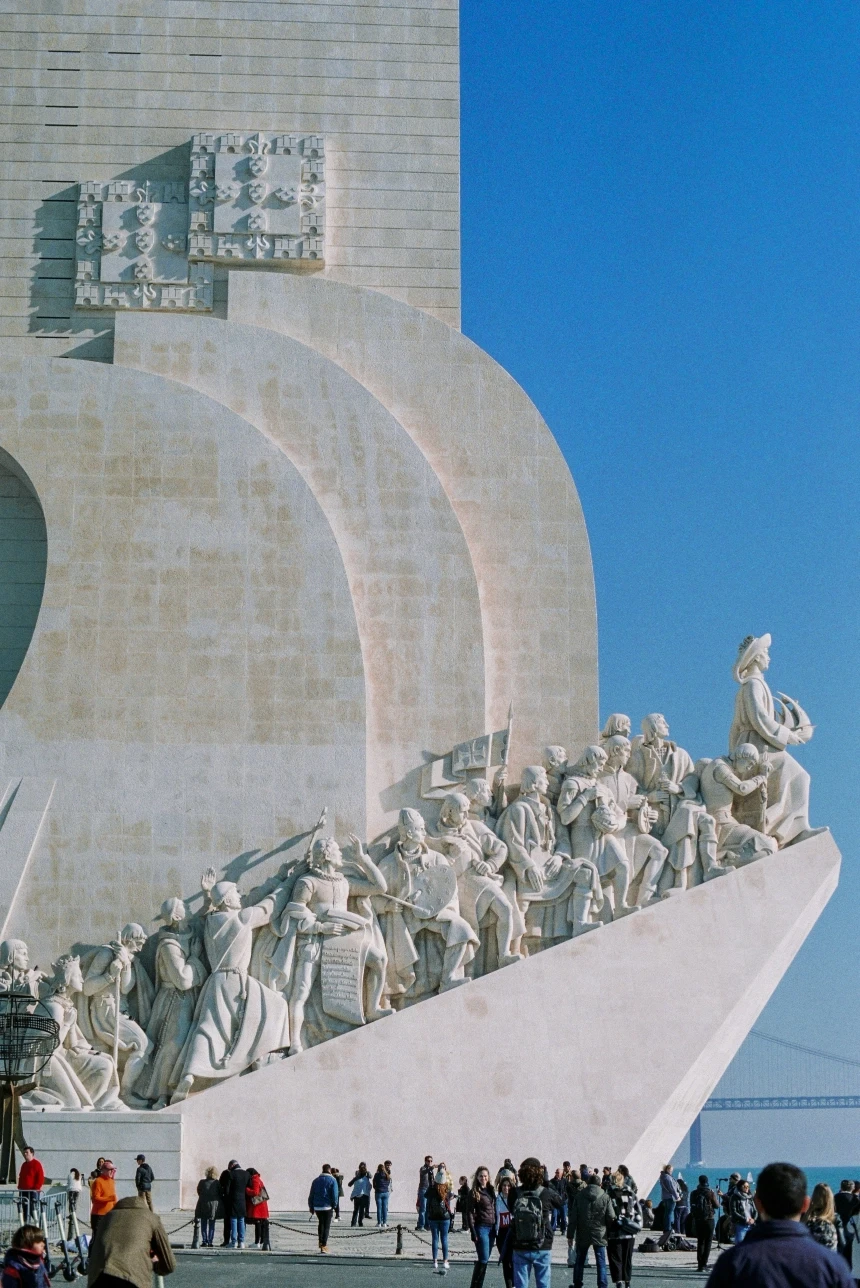
The Monument to the Discoveries is one of the easiest Belém landmarks to understand at a glance. Visit Lisboa describes it as a monumental sculpture beside the Tagus, commemorating the golden age of Portuguese history. It is large, theatrical and almost impossible to miss if you are walking the riverfront.
This is worth seeing because it helps tie the whole area together visually and historically. It also makes a lot more sense when you see it as part of Belém’s wider riverside setting rather than as a standalone object to tick off and leave behind.
MAAT
If you want something more modern in Belém, MAAT is one of the best reasons to stay in the area longer. The museum is open from Wednesday to Monday, 10:00 to 19:00, and it has become one of the neighbourhood’s key contemporary landmarks.
MAAT works especially well if you want to balance Belém’s historic monuments with something more current. It is a good stop on hot days, rainy days, or simply when you want the area to feel more varied than just monasteries and river views.
CCB and MAC/CCB
The Centro Cultural de Belém is one of the most important modern buildings in the area. Visit Lisboa describes it as one of modern Lisbon’s biggest icons, and the official CCB site highlights its gardens, terraces and cultural programming. The MAC/CCB museum is also a strong reason to stop, with the museum open Tuesday to Sunday from 10:00 to 18:30.

This is one of the best parts of Belém if you want a less obvious visit. The area around CCB gives you architecture, public space, cultural programming and one of the better modern sides of Lisbon in a district that is usually framed only through old monuments.
National Coach Museum
The National Coach Museum is one of the most underrated sights in Belém. Visit Lisboa says it houses a unique collection of 17th-, 18th- and 19th-century coaches and notes that it is the most visited museum in Lisbon, if not in Portugal. The official museum page says it is open Tuesday to Sunday, 10:00 to 18:00, with last entry at 17:30.
This is a surprisingly good stop even for people who would not normally get excited about carriages. The scale, decoration and sheer oddness of the collection make it much more memorable than it sounds on paper.
The riverside walk
One of the best things to do in Belém costs nothing. The riverside itself is a big part of why the area works. Walking between the main sights, taking in the Tagus, and letting the open space slow the pace down is part of the experience, not just the route between attractions. Visit Lisboa’s Belém region page reinforces that broader identity of Belém as one of Lisbon’s key riverside districts.
This is also why Belém usually feels better when you do not over-schedule it. A bit of walking, one or two main sights, and time by the river is often a better plan than trying to force everything into one overstuffed morning.
Pastéis de Belém
No Belém guide should pretend this stop is optional. Pastéis de Belém says it has been making the original pastries since 1837, following an older recipe linked to the monastery. Whether or not you build your whole visit around them, they are still one of the neighbourhood’s defining stops.
It is touristy, yes. It is also still worth it. The smart move is to treat it as a proper stop in the day rather than something to squeeze in while rushing elsewhere. Belém generally rewards that slower approach.
Which sights in Belém should you prioritise?
If you only have a short time, the strongest Belém combination is usually Jerónimos Monastery, the Belém Tower exterior, the Monument to the Discoveries, and Pastéis de Belém. That gives you the essential historic side of the area without trying to do too much.
If you have longer, add MAAT, CCB / MAC-CCB, or the National Coach Museum. That is when Belém starts to feel like a fuller neighbourhood rather than a famous photo stop.
Practical tips before you go
Belém works best when you group nearby stops and accept that you probably will not do everything. The area is more spread out than first-time visitors often expect, and some sights matter more from the outside than from the inside depending on queues, weather and current access.
A good approach is to go in the morning, pick one major interior visit, leave time for the riverside, and avoid turning the whole thing into one long line. Belém is much more enjoyable that way.
Final thoughts
Belém is one of the most rewarding areas in Lisbon when you give it a little more time than the standard postcard version. Yes, the famous monuments matter. But so do the river, the spacing between sights, the modern cultural stops and the feeling that this part of Lisbon has its own scale and mood.
If you want the simplest shortlist, start with Jerónimos Monastery, Belém Tower, the Monument to the Discoveries, CCB / MAAT, and Pastéis de Belém. That already gives you a very good Belém day.
Planning several paid visits in Belém? Check whether the Lisbon Card is worth it for your wider itinerary before buying separate entries.
FAQ
1. What is Belém known for?
Belém is known for its major historic monuments, especially Jerónimos Monastery, Belém Tower and the Monument to the Discoveries, as well as its riverside setting and cultural institutions.
2. What should I not miss in Belém?
The main sights not to miss are Jerónimos Monastery, Belém Tower, the Monument to the Discoveries, Pastéis de Belém, and, if you have more time, MAAT or CCB / MAC-CCB.
3. Is Belém worth visiting?
Yes. Belém is one of Lisbon’s most rewarding districts because it combines major history, riverside walks, architecture, museums and one of the city’s most iconic food stops.
4. How long do you need in Belém?
A good first visit usually takes half a day to a full day, depending on whether you go inside the monuments and museums. This is an editorial estimate based on the area’s layout and number of major stops.
5. Is Belém better than the city centre?
They do different things. Central Lisbon is denser and easier for wandering, while Belém is more spread out and focused on monuments, museums and the riverfront. Most visitors enjoy Belém as a separate half-day or day trip within the city.
Continue planning with our guide to Best Things to Do in Lisbon and What to see in Alfama.
If you want to stay west of the centre, compare our best hotels in Belém.

Rafael Rocha
The Author
Having lived and studied in Lisbon for many years, a deep connection to the city grew naturally over time. Here I share practical guides and local recommendations to help you experience Lisbon better.
Buy me a coffee